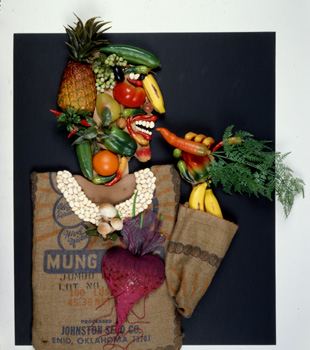
Is a vegetarian diet safe for children?
More and more people of all ages are choosing a vegetarian diet these days. Is this diet okay for children though? Can children meet their nutritional requirements on this type of diet? A well-balanced vegetarian diet can keep kids at a normal weight, teach them to make healthy food choices and lead children down a road of future good eating habits.
People choose a vegetarian lifestyle for many reasons: religion, environmental, and animal rights to name a few. Children may follow a vegetarian diet because their parents do, because a friend does, or even because they’ve decided upon it based on what they’ve learned in school. There are also several different types of vegetarian diets. For example, ovo-lacto vegetarians eat eggs and milk products and vegans avoid all animal products.
Children are a special group with very high nutritional needs for maintaining growth and development. All kids in our American society, vegetarians included, are widely at risk of the negative effects of a low fiber, low calcium diet. Vegetarian kids, depending on how strict their diet, would also be at risk for low intake of protein, iron, zinc, vitamin B12 and vitamin D. It is possible, however, to get these nutrients from foods such as meat alternatives, vegetables, soy products, beans and legumes.
Calcium in the vegetarian diet can be found in dark green vegetables such as broccoli and all dairy products. The general diet we consume also incidentally gives us approximately 25% of our daily needs. The amount of calcium that vegetarians take in, therefore, is dependent on how strict the diet is. Children should be encouraged to try a variety of foods in order to get the green vegetables needed in the diet for a calcium boost. If a child doesn’t respond well to a vegetable the first time offered, try again. Usually multiple exposures to a food item will prove a success.
B12 is found mostly in animal foods, putting vegetarians at possible risk for not getting enough B12. Vegetarians can find B12 in places such as milk, cheese, eggs, and fortified grains/cereals. For those who avoid all animal products, Vitamin B12 is best supplemented. The body can still effectively use the B12 in a supplement form.
Protein is always a hot topic. People ask vegetarians all the time: “how do you get enough protein?” Studies have shown that people in our western society who take in enough calories naturally get enough protein. If you are one to eat only Twinkies, maybe you would have a problem getting the protein your body needs. Vegetarians can find protein in everything from whole grain breads and cereals to peanut butter, beans and rice, dairy foods and eggs. Most foods (except fruits) contain even a small amount of protein. As long as kids are exposed to a wide variety of foods, they should be getting the protein they need.
Most American children have high intakes of dietary fat and saturated fat. Eating a vegetarian diet which is typically lower in fat may be beneficial in teaching kids good eating habits for later on in life in order to avoid certain chronic diseases. Also, on the whole, American children eat low amounts of fruits and vegetables. A vegetarian child who chooses to eat a wide variety of these items would be increasing the fiber in their diets—something that we mentioned as being extremely low in the American diet.
One thing we should keep in mind is the startling epidemic going on in our country with obesity. Nearly 2 out of 3 adults and 1 out of 6 children are overweight or obese. Vegetarians, depending on the type of diet they choose, typically have lower rates of obesity than the rest of the population. Being a vegetarian would again be protective against diseases resulting from the obesity epidemic in this country.
At a time
when we are seeing our waistlines grow—and unfortunately our
children’s waistlines growing, Americans need to take a step back and
see the
big picture. Should we be resisting or accepting of a diet that lowers
weight,
offers more fiber, offers more heart benefits, teaches children to eat
a
variety of fruits and vegetables and promotes an all around healthier
lifestyle? We should understand that vegetarians should be concerned
with the
amounts of certain nutrients they should be getting, but so should all
children
in this country.
Links:
ADA
Position Paper on Vegetarian Diets
Vegetarian Resource Group
International Vegetarian Union
The Vegetarian Society
Vegetarian Times Magazine
Nothing will benefit
human health and increase chances for survival of life on Earth as much
as the evolution to a vegetarian diet. Albert
Einstein (1879-1955)
Karin E. Hosenfeld
Senior Clinical Dietetics Student
UTSouthwestern
Karin.Hosenfeld@utsouthwestern.edu

Site created 3/8/05
Back to Top